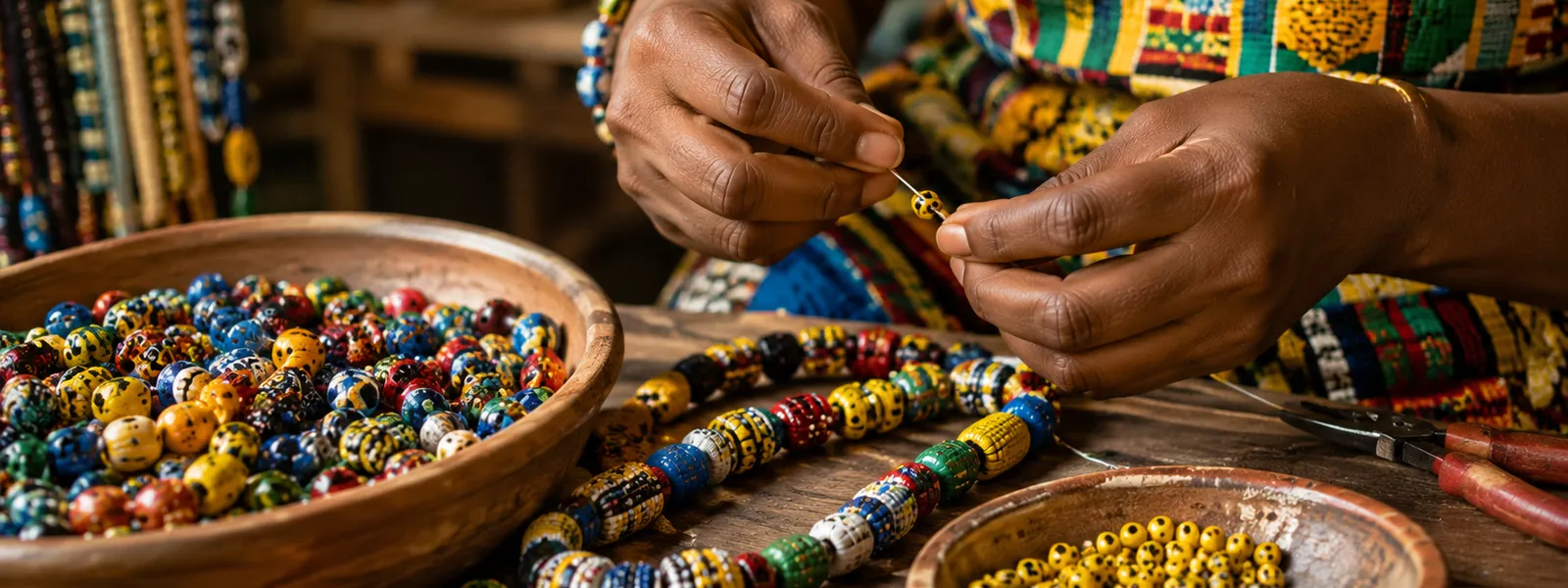
Culture
Ghana’s Beadmaking Tradition: The Craft, Culture and Stories Behind Every Bead
Explore the fascinating history of beadmaking in Ghana and discover how Krobo artisans transformed glass, fire and traditional craftsmanship into a cultural legacy known around the world
ELIZABETH TETTEH•October 1, 2026•6 min read
Long before beads became colourful accessories sold in markets and boutiques, they were objects of identity, trade, ceremony and status.
In Ghana, that history stretches across generations. Beads have been made from materials such as stone, bone, shells, clay, seeds and brass, while imported glass beads later became an important part of West African trade. Today, Ghana is particularly renowned for its distinctive glass beadmaking tradition, with the Krobo communities of the Eastern Region at its centre.
But the story of Ghanaian beads is not simply a story about jewellery. It is a story about trade, craftsmanship, culture and the ability of communities to transform foreign materials into something unmistakably their own.
““A bead in Ghana is rarely just a bead. It can mark a celebration, a transition, a relationship or a memory.””
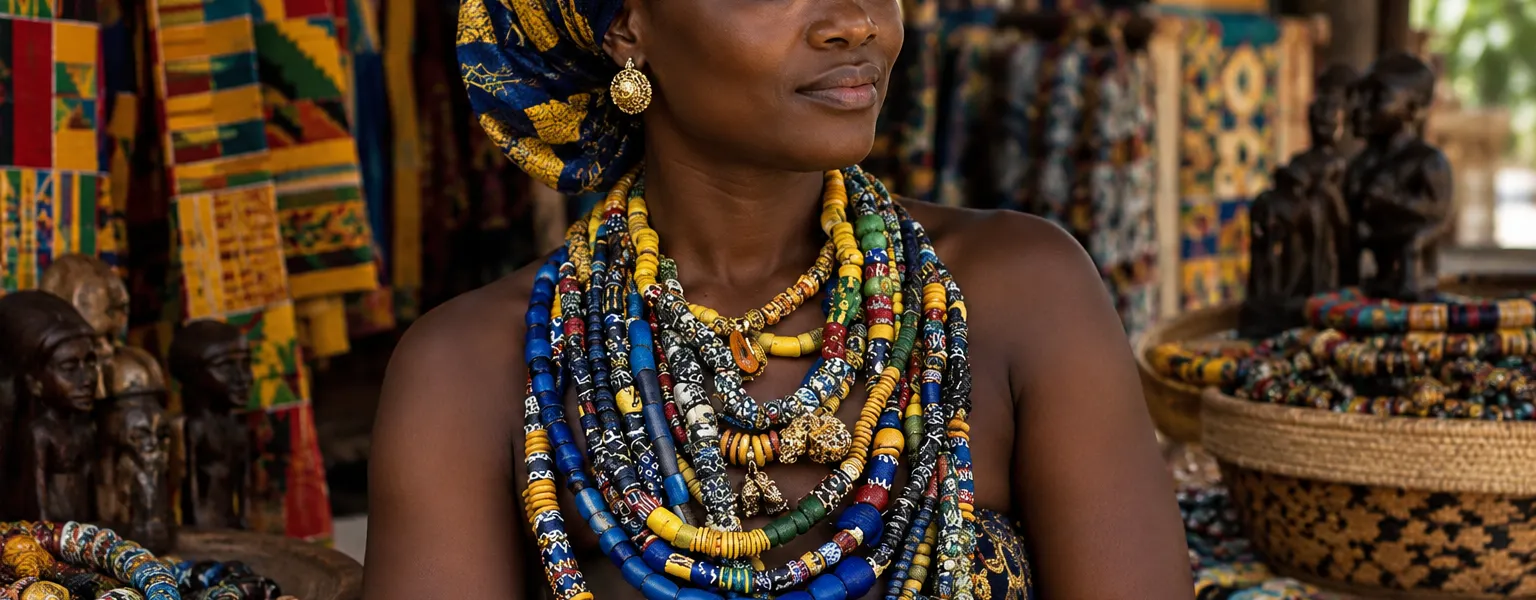
Before Glass: The Early Life of **Beads** in Ghana
Beadmaking in Ghana did not begin with glass.
Across the region, beads were produced from materials that communities could obtain locally, including stone, bone, shells, seeds and clay. These materials could be shaped, polished or pierced and then strung together for personal adornment and ceremonial purposes. Archaeological and cultural studies point to the long use of such materials in Ghana and elsewhere in West Africa.
Beads also became connected to the wider trading networks that crossed West Africa. As trans-Saharan and later Atlantic trade expanded, new materials entered local markets. European traders brought glass beads, including varieties manufactured in Venice and other European centres, into West African trading systems.
The arrival of these colourful glass beads did not erase local traditions. Instead, Ghanaian artisans incorporated them into existing forms of dress, ornamentation and cultural expression.
And eventually, some communities began making glass beads themselves.
The Rise of Krobo **Beadmaking** (opens in a new tab)
When people speak about Ghanaian glass beads today, one name appears repeatedly: Krobo.
The Krobo people, part of the wider Dangme-speaking communities of southeastern Ghana, developed a remarkable tradition of powder-glass bead production. Odumase-Krobo and surrounding communities eventually became major centres for the craft. The exact origins of glass beadmaking among the Krobo remain debated because archaeological evidence is limited, and researchers distinguish between documented history and oral traditions.
What is clear is that the craft became deeply embedded in Krobo society and was passed through generations.
One particularly fascinating aspect is the material itself.
Instead of depending entirely on newly manufactured glass, traditional beadmakers could crush discarded glass into powder and transform it into colourful new beads. Old bottles and other glass fragments could be cleaned, crushed and prepared for firing in specially shaped clay moulds.
What might have looked like waste became something valuable.
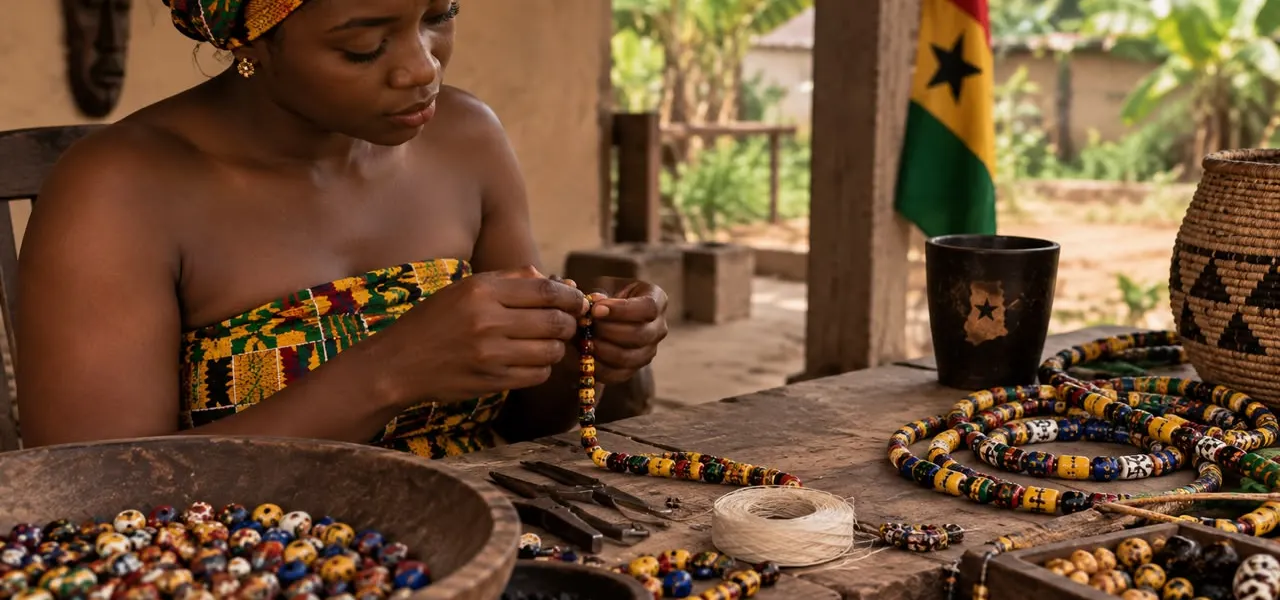
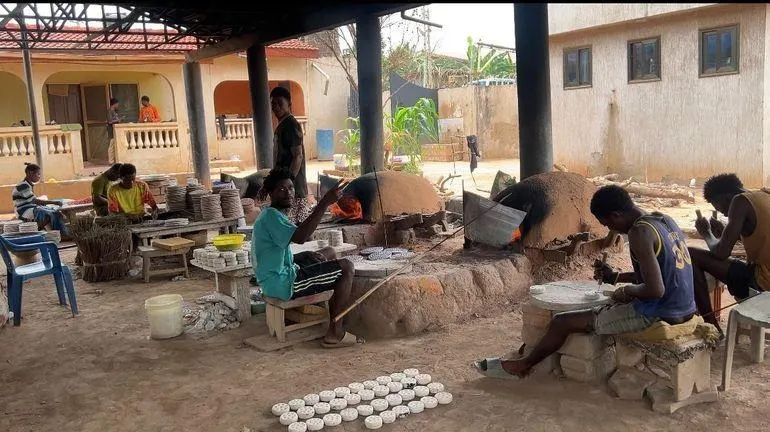
Inside the Beadmaker's **Workshop**
The traditional process is deceptively simple.
Glass is collected, sorted and crushed into powder. The powder can be separated by colour and sometimes combined with colouring materials. Artisans then place the prepared glass into clay moulds, creating the desired shapes and patterns before placing the moulds in a furnace for firing.
The technique produces the characteristic texture and appearance associated with Ghanaian powder-glass beads.
A finished bead therefore represents much more than its few centimetres of colour.
It carries the work of the person who crushed the glass, prepared the mould, arranged the colours, controlled the fire and finished the piece.
““The fire does not simply make the bead; it completes a process that begins with the hands of the artisan.””
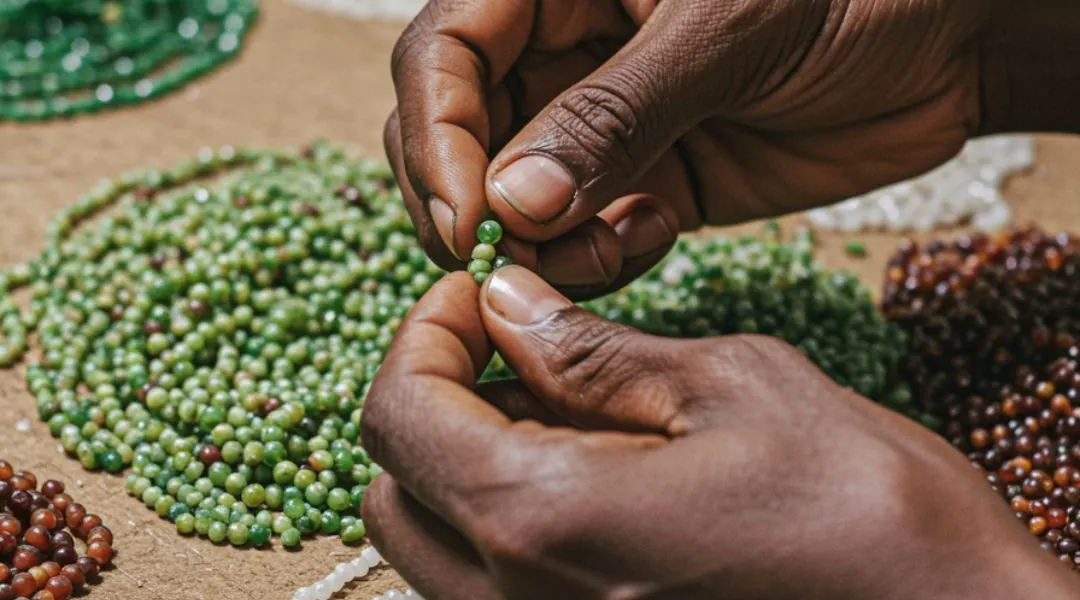
More Than Decoration
For generations, beads have occupied an important place in Ghanaian social and cultural life.
Among the Krobo, beads are associated with important stages of life, including birth, coming-of-age ceremonies, marriage and death. They also appear prominently during festivals and other traditional celebrations.
The Dipo initiation tradition is particularly associated with the use of beads. During the ceremony, beads form an important part of the adornment worn by girls undergoing the rite, connecting personal appearance with cultural identity and transition into adulthood.
Beads can therefore communicate things that clothing alone may not.
They can signify beauty, maturity, celebration, social identity and cultural belonging.
From Family Workshops to a Global Craft
For a long time, beadmaking remained closely tied to family knowledge.
Skills were passed from one generation to another, with younger members learning through observation and practice. Studies of Krobo bead production describe the craft as a family-based industry in which techniques and knowledge were traditionally transmitted between generations.
Today, the tradition has grown beyond individual households.
Beadmaking centres around Odumase-Krobo, Somanya and other communities in the Eastern Region produce beads for Ghanaian buyers as well as international markets. Workshops receive visitors interested in learning the process, while bead markets have become important destinations for traders, designers and tourists.
The craft has also adapted.
Contemporary beadmakers experiment with colours, shapes, finishes and recycled materials while continuing to use traditional techniques. Some artisans now combine old methods with newer equipment and designs, allowing the industry to respond to changing markets without abandoning its roots.
A Tradition Still Burning
Perhaps the most remarkable thing about Ghanaian beadmaking is its continuity.
The materials may have changed. The markets may have expanded. Modern jewellery designers may now incorporate Ghanaian beads into contemporary fashion.
But at the heart of the craft, there is still glass, clay, colour, fire and human hands.
The history of beadmaking in Ghana is therefore not locked in the past. It is still being written every time an artisan fills a mould, lights a furnace and waits for a new bead to emerge.
And that may be the enduring beauty of Ghana's beads: they have survived not by remaining frozen in history, but by allowing history to move through them.
#africa#African glass beads#artwork#beadmaking#e-commerce#education#Ghana#Ghanaian beads#Krobo beads#seo#tradition#weshopafrica.com
ET
Editorial
ELIZABETH TETTEH
October 1, 2026
Related Articles
View All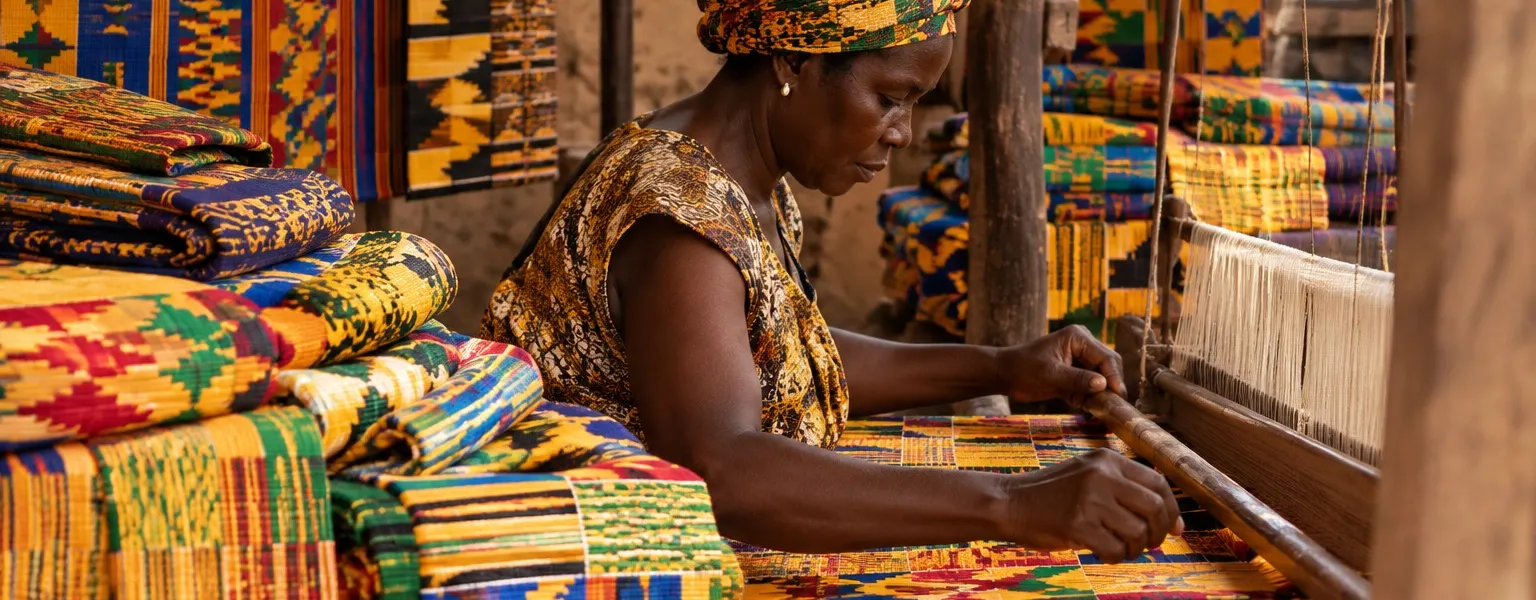
Culture
The Tradition, Art and Craft Behind the Iconic Kente Cloth
Explore the rich history of Kente in Ghana, from its royal heritage and traditional weaving techniques to its cultural significance and influence on modern fashion. Discover the craftsmanship behind one of Africa's most recognisable textiles and its enduring place in Ghanaian culture.
Announcements
E-Commerce in Africa: The Digital Revolution Changing How We Shop
The future of commerce in Africa is increasingly digital