In today's digital world, shopping, banking, and managing accounts online has become part of our daily lives. While technology has made these activities faster and more convenient, it has also created opportunities for cybercriminals to target unsuspecting users.
Understanding Online Account Fraud
Digital security is essential as financial, retail, and personal activities increasingly move online and fraud tactics become more sophisticated. Protect your accounts through strong digital habits, multi-layer authentication, secure networks, and continuous vigilance
Regardless of who you are, understanding how fraud operates and how modern platforms protect you is essential
Online fraud include: Phishing/Vishing, Credential Stuffing ,SIM Swapping, Fake links/calls, Reusing compromised passwords, Hijacking SMS 2FA
What to Do to avoid Fraud;
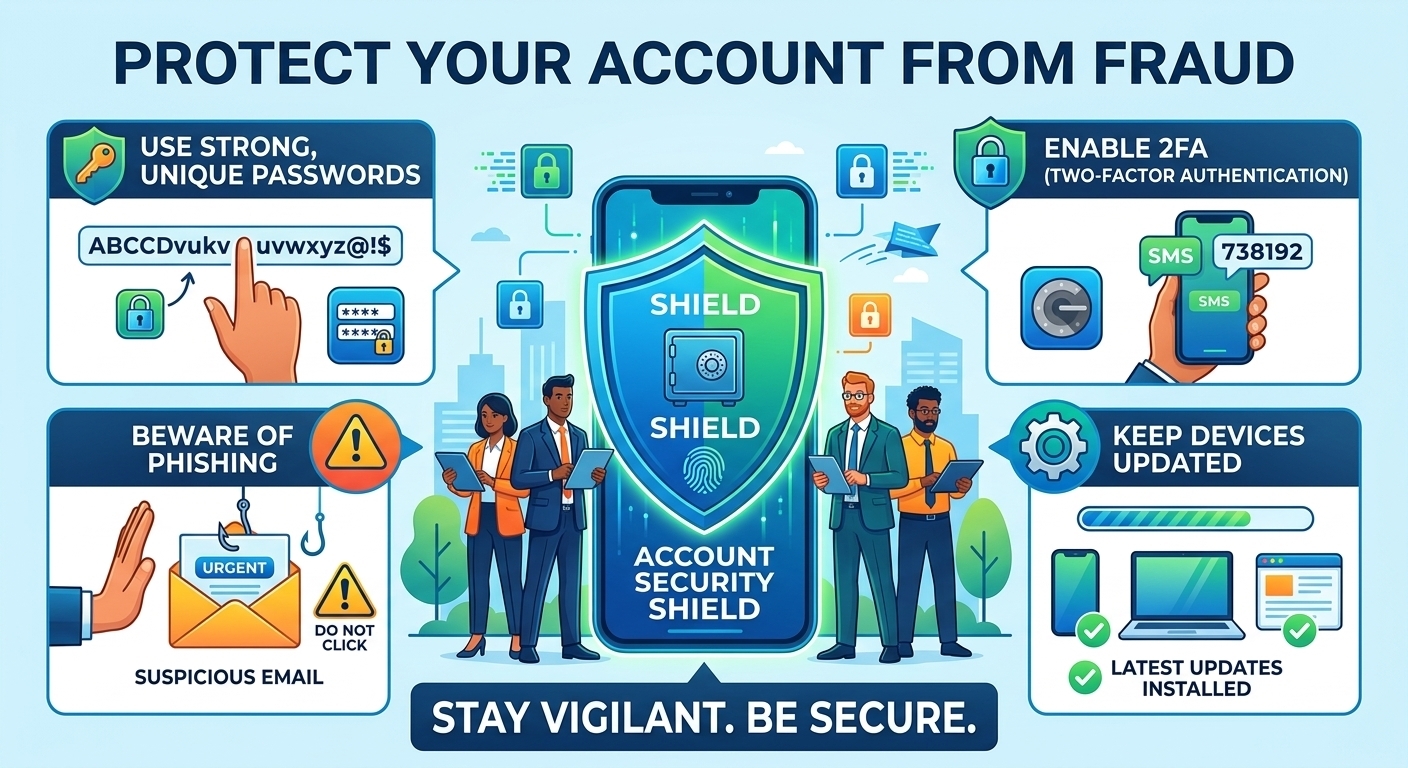
- Create a Strong and Unique Password
A strong password should:
- Be at least 12 characters long.
- Include uppercase and lowercase letters, numbers, and special characters.
- Avoid common words, names, birthdays, or predictable patterns.
- Be different from the passwords you use on other websites.
If you reuse the same password across multiple accounts, a breach on one website could expose all your other accounts. Consider using a trusted password manager to generate and securely store unique passwords.
- Enable Two-Factor Authentication (2FA)
Whenever available, enable Two-Factor Authentication (2FA). This feature adds an extra layer of protection by requiring a second verification step in addition to your password. For example, after entering your password, you may receive a verification code on your phone or through an authentication app. Even if someone manages to obtain your password, they cannot access your account without this second verification.
This simple step greatly ipasswmproves your account's security.
- Stay Alert for Phishing Attempts
- Correct spelling of the website name
- Professional website design and contact information
Be cautious when shopping through links shared on social media or in unsolicited emails.
- Monitor Your Account Regularly
Checking your account activity regularly can help you detect suspicious activity before it becomes a serious problem. Review your account for:
- Unknown login attempts
- Unauthorized purchases
- Changes to your personal details
- Unrecognized payment methods
If you notice anything unusual, change your password immediately and contact customer support.
- Avoid Public Wi-Fi for Sensitive Transactions
Public Wi-Fi networks in cafés, airports, hotels, and shopping centers are convenient but may not always be secure.
When using public Wi-Fi:
- Avoid logging into sensitive accounts whenever possible.
- Do not enter payment information.
- Consider using a trusted Virtual Private Network (VPN) for added protection.
Whenever possible, use your mobile data or a trusted private network for online shopping and banking.
- Log Out After Each Session
If you access your account on a shared computer or public device, always log out when you're finished.
Avoid selecting "Remember Me" or saving your password on devices that others may use. Taking a few extra seconds to log out can prevent unauthorized access to your account.
Our Commitment to Your Security
At WeShopAfrica, protecting our customers is at the heart of everything we do. Our cyber security personnels continuously improve our security systems and encourage all users to follow safe online practices.
While no system is completely immune to cyber threats, staying informed and adopting good security habits can greatly reduce your risk. Online safety is a shared responsibility, and together we can create a safer shopping experience for everyone.
At WeShopAfrica, we're committed to providing a secure and trusted marketplace where you can shop with confidence. Stay informed, stay vigilant, and enjoy a safer online shopping experience with us.
Phishing is one of the most common forms of online fraud. Cybercriminals create convincing emails, text messages, or social media posts that appear to come from trusted organizations.
These messages often claim that your account has been suspended, a payment has failed, or you have won a prize. They encourage you to click a link and enter your login details.
Before clicking any link:
- Check the sender's email address carefully.
- Look for spelling or grammar mistakes.
- Avoid messages that create unnecessary urgency.
- Visit the official website directly instead of clicking links in unexpected emails.
If something feels suspicious, trust your instincts and verify the message before taking any action.
- Never Share Your Login Information
Your password, verification codes, and security answers are personal. Never share them with anyone, even if they claim to be from customer service.
At WeShopAfrica, we will never ask you to provide:
Editorial
ELIZABETH TETTEH
August 14, 2026